

REGIONAL TURBOPROPS IN NORTH AMERICA: A LEGACY IN DECLINE
 24
24
)


For decades, regional air travel across North America was dominated by propeller-driven aircraft. Turboprops like the SAAB 340 and Beechcraft 1900 handled short routes, connecting small towns to bigger cities.
Passengers took ATRs and Dash-8s for flights between secondary cities and major hubs, but had to board through tiny terminals, often walking across the tarmac. It wasn’t ideal, but it served its purpose. Turboprops were economical, could land on short runways, and kept regional networks alive.
These planes were practical, but passengers didn’t really like them. They were noisy, slow, and seemed outdated next to the modern jets on longer routes. Airlines faced a dilemma. They needed something faster, quieter, and more comfortable yet small enough to serve thin routes economically. But the answer didn’t exist just yet.
THE RISE OF THE REGIONAL JET
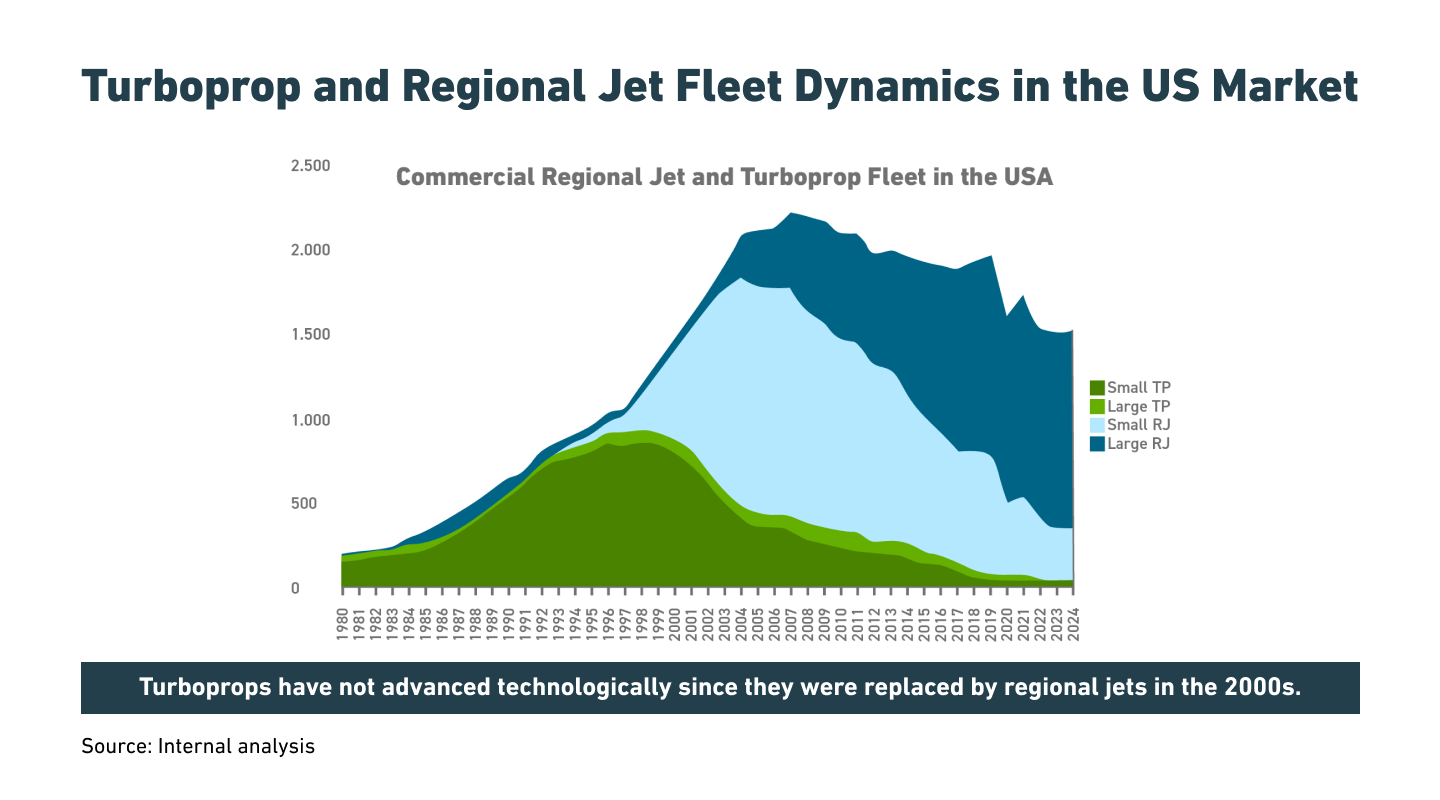
By the mid-1990s, regional jets like the Canadair Regional Jet (CRJ) and Embraer ERJ families began serving regional airports, promising greater speed, comfort, and the prestige of flying aboard a real jet.

These new aircraft were sleek, fast, and airlines loved operating them. They could integrate better into hub-and-spoke systems, offer higher cruise speeds and reduce block times. Regional jets were also interchangeable with other single-aisle aircraft, without requiring adjustments to the schedule. Passengers appreciated the quieter cabins and the absence of propeller vibration. Eventually, their expectations shifted permanently, and comfort took precedence over marginal savings.
Suddenly, turboprops seemed outdated and the market began to tilt. The decline wasn’t overnight; it was more like a slow erosion. Airlines began phasing out their SAAB and Beechcraft fleets first, followed by gradual reductions in ATR and Dash-8 operations.

The most recent introduction of Regional Turboprops into the U.S. was Silver Airways in 2019. Silver was upgrading from older 34-seat SAAB 340s to larger ATRs. At the time the airline boasted that aircraft with better economics and efficiency would be transformational for Silver. ATR indicated that the introduction of the new aircraft would lead to what they expected to be a new wave of eco-responsible and passenger- friendly regional travel, and the return of the ATRs in the U.S. However, only five years later the ATRs were gone, and Silver was out of business.

No one else has adopted new ATRs for scheduled service. A few turboprops remain in service today, mostly in niche operations, but their footprint is shrinking rapidly.
WHY CONVENTIONAL TURBOPROPS WON’T RETURN
While sustainability discussions occasionally revive interest in turboprops, the reality is that infrastructure and networks have changed, and many small routes were abandoned to other forms of travel. Scope clauses now dictate the market requirements. Smaller turboprops are unlikely to return unless new aircraft with better economics are developed and chronic shortages of maintenance technicians and pilots are resolved.

Bringing back large-scale turboprop operations would require reversing decades of structural change, a scenario that is neither practical nor economically viable.
This reality was further reinforced by the announcement earlier this fall from Embraer’s CEO, confirming the cancellation of their turboprop program, signaling a strategic pivot toward electric and hybrid propulsion concepts rather than conventional turboprops.
LEGACY AND FUTURE
Turboprops didn’t fail; they evolved out of necessity. While they connected communities and made regional flying affordable, their decline reflects a broader truth, that aviation is continually striving for speed, comfort, and efficiency.
And as sustainability reshapes the industry, the spirit of the turboprop may return, not with propellers, but with quiet, electric motors powering the next generation of short-haul aircraft.
While these technologies are still in development, they align with global decarbonization goals and passenger expectations for modern, eco-friendly travel. Unlike turboprops, electric and hybrid aircraft represent a forward-looking solution rather than a nostalgic return to the past.
- Log in to post comments